
Esports Advertising: Sponsorship Ideas for Broadcasts and Events
Esports advertising can be more useful than a logo fixed in the corner of a stream. A tournament broadcast contains map transitions, replays, timeouts, draft phases, player comparisons, technical pauses, post-match analysis, and awards. Each can become defined sponsorship inventory.
The goal is not to add the greatest possible number of logos. It is to place sponsor content where it is visible, relevant to the moment, and consistent with the broadcast’s visual system.
What Is Esports Advertising?
Esports advertising is paid promotion through esports media, broadcasts, events, teams, creators, or game-related environments.
Esports sponsorship usually describes a broader commercial relationship with a team, tournament, league, or production.
Team sponsorship can cover jerseys, content, social channels, or team-owned broadcasts.
Tournament sponsorship applies to a competition, season, or event.
In-game advertising appears inside the game environment and is generally controlled by the publisher.
Broadcast sponsorship activation integrates a brand through overlays, segments, replays, statistics, studio graphics, or timed creatives.
This article focuses on advertising within broadcasts and events. These formats can support tournament partnerships and esports team sponsorships without placing a sponsor inside the game itself.
Why Static Sponsor Logos Are Not Always Enough
A permanent logo provides continuous exposure, but viewers are also following the action, score, minimap, economy, timers, and player status.
A 2025 esports eye-tracking study found that attention varied by placement and by match versus non-match periods. Gaze duration was longer in non-match periods, although attention, recall, and brand evaluation did not move identically. The study involved 41 participants, so it supports testing rather than a universal placement rule.
For producers, the practical variables are timing, position, size, contrast, duration, frequency, and screen clutter. A corner logo can mark sponsorship rights, while a larger contextual graphic may suit a timeout, replay, or post-round window.
8 Esports Advertising and Sponsorship Ideas
1. Branded broadcast overlays
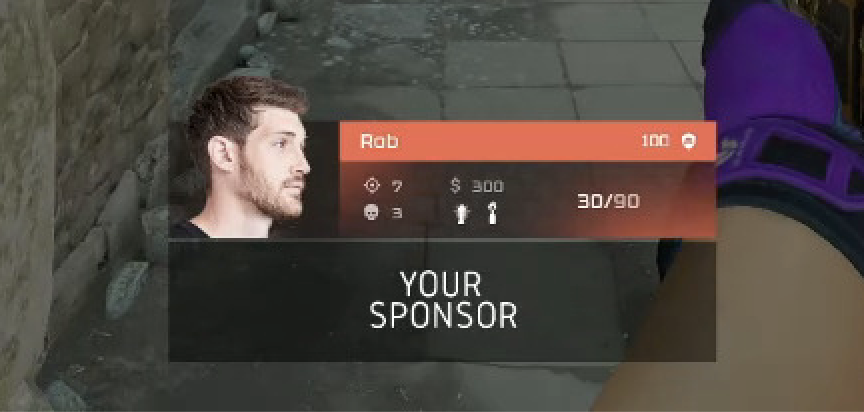
Add a sponsor to scoreboards, lower thirds, map-veto screens, draft graphics, schedules, or lineups. This suits technology, telecom, hardware, and B2B partners seeking regular visibility. Keep the brand secondary to scores, timers, and player information.
Example: A map-veto screen includes a restrained “Presented by” lockup. Test the layout at broadcast resolution so the logo does not reduce readability.
2. Sponsored statistics and player comparisons
Connect a sponsor with useful analysis: first-kill rate, economy, damage, objective control, utility use, or head-to-head performance. Data, finance, cloud, and hardware brands are natural candidates.
Example: Between rounds, a sponsored panel compares two entry players. Use consistent calculations throughout the event; inaccurate or unexplained statistics can weaken both the segment and the sponsor association.
3. Branded replay segments
Place branding in replay stingers, wipe animations, frames, or “moment of the match” packages. The format fits camera, display, component, automotive, and electronics brands, especially during highlight-heavy tournaments.
Example: A short sponsor transition introduces a decisive multi-kill replay. Keep the animation brief and ensure it cannot delay the return to live gameplay.
4. Sponsored timeout or technical-break graphics
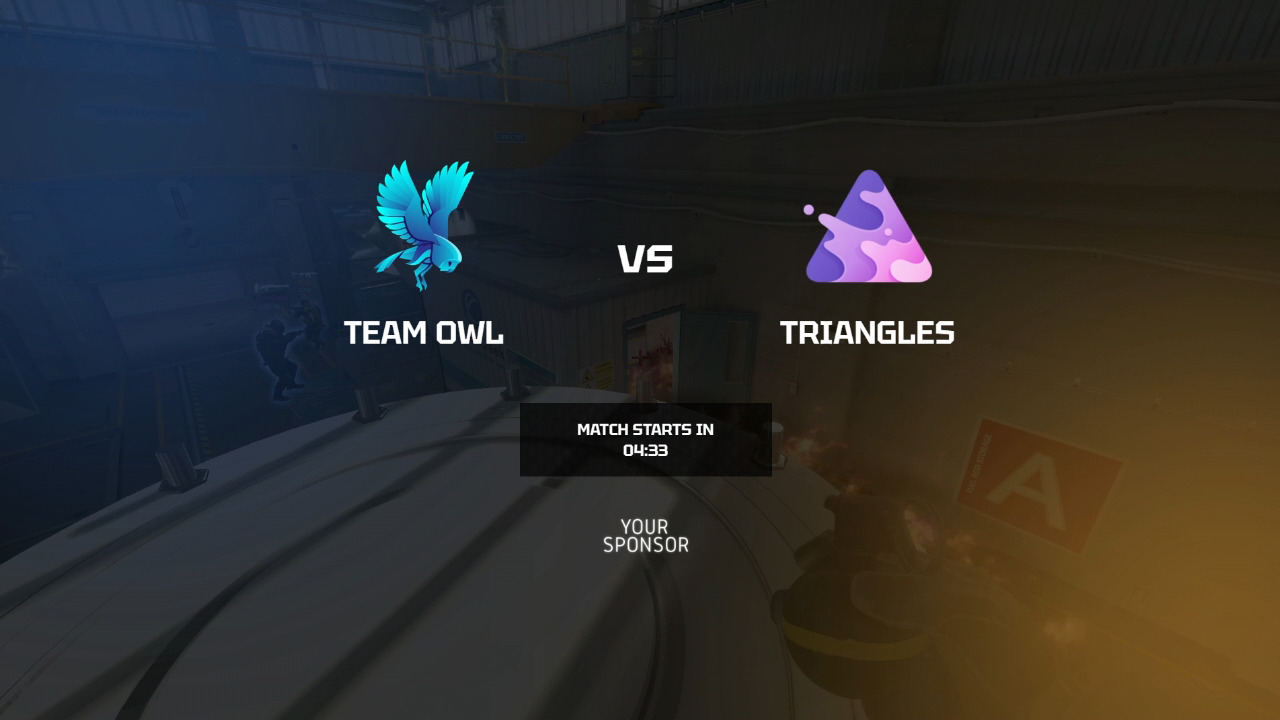
Timeouts and technical pauses create clear advertising windows, although their length is unpredictable. Prepare several creative durations and use neutral copy, especially during technical problems.
Example: A beverage or delivery sponsor appears beside a reduced caster camera during a timeout. The production team should have a defined method for clearing the creative as soon as play is ready to resume.
5. Product placement within the studio or analyst desk
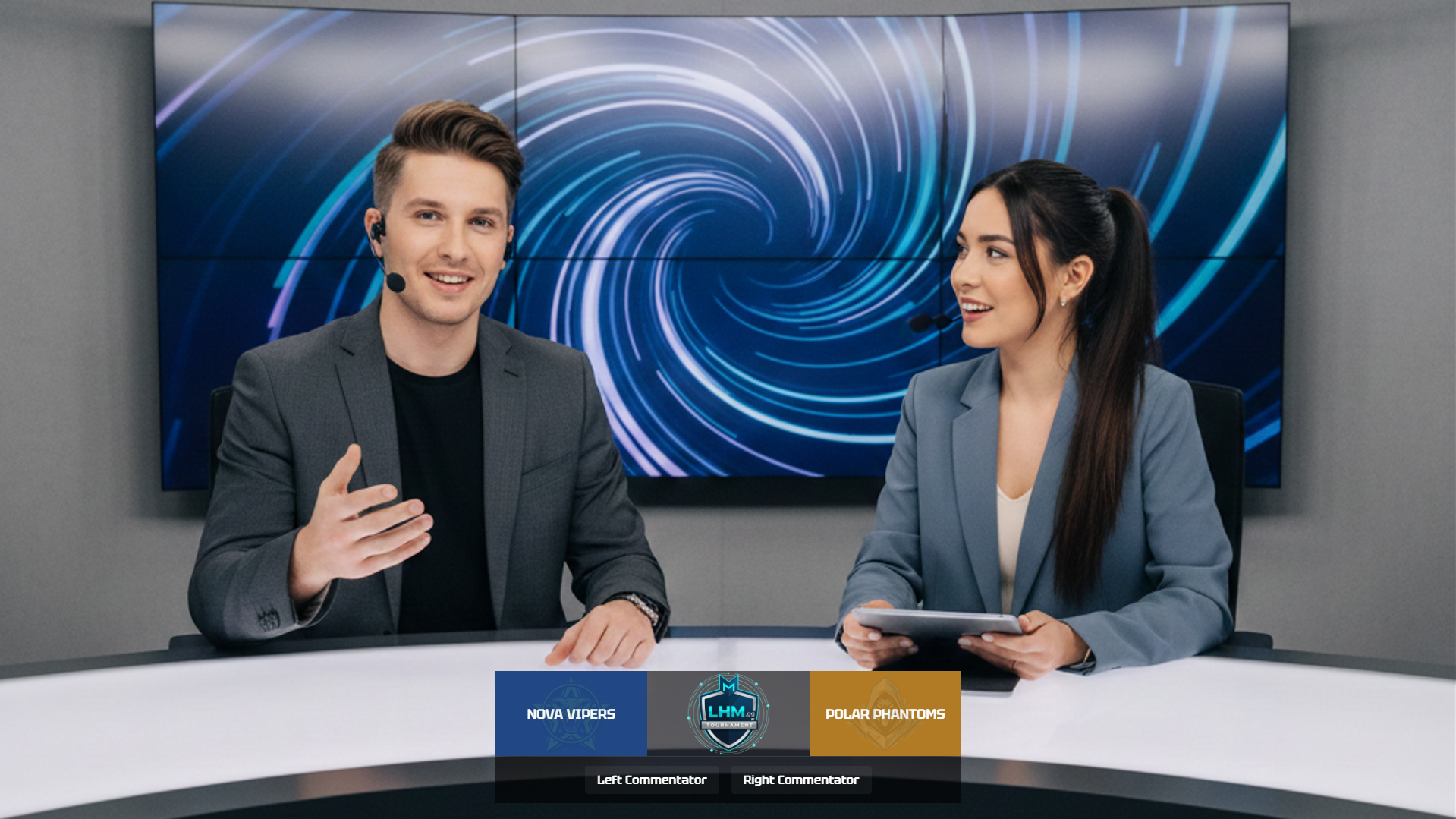
Physical products can appear on desks, shelves, interview sets, player booths, or video walls. This works for peripherals, chairs, displays, beverages, apparel, and lifestyle brands.
Example: Sponsor monitors appear on the analyst desk with one host-read acknowledgment. Confirm venue, safety, talent, camera, and publisher requirements so products do not block presenters or screens.
6. Sponsor integrations across social media and the live broadcast
Extend one activation across pre-event posts, live graphics, audience voting, clips, and post-match content. This gives esports marketing teams a connected campaign rather than isolated exposure.
Example: Fans vote for a sponsored play of the day, which is replayed during the final desk segment. Agree on channel ownership, disclosure, clip rights, approvals, and player participation before the event.
7. Branded MVP, map, round, or match segments
Turn repeatable competition moments into saleable assets. Many sponsorship ideas for sports teams-player awards, performance features, and named analysis—translate well to esports.
Example: After each series, a sponsor-backed MVP card shows the player, core statistics, and one replay. Limit the number of named segments so the broadcast does not feel like a sequence of commercial labels.
8. Event-triggered sponsor ads
Display a creative when a predefined, supported game or production event occurs. Depending on the game and available triggers, events such as Round End, Freezetime, or Timeout can activate a corner graphic, HUD element, or full-screen overlay.
Example: An ad appears briefly after a completed round and clears before the next active phase. Choose safe triggers, set duration limits, test every creative, and maintain a production fallback for unexpected situations.
Event Advertising Examples in Esports Broadcasts
Practical event advertising examples include a sponsor graphic during a timeout, a branded desk segment between maps, an MVP award after a series, a sponsored statistics panel, a short post-round ad, or a full-screen creative during a predefined break.
None should obscure a clutch, draft decision, objective fight, timer, player status, or other information required to understand the match. Define the entry condition, maximum duration, exit condition, and production fallback for every activation.
How Event-Triggered Esports Advertising Works
Event-triggered advertising connects a known signal with a graphic action. Once the required condition is met, the assigned creative appears according to predefined placement and duration rules.
The exact source of the trigger depends on the technology and production setup. In LHM Signals Ads, the trigger is a supported in-game event or another criterion available within the ad configuration.
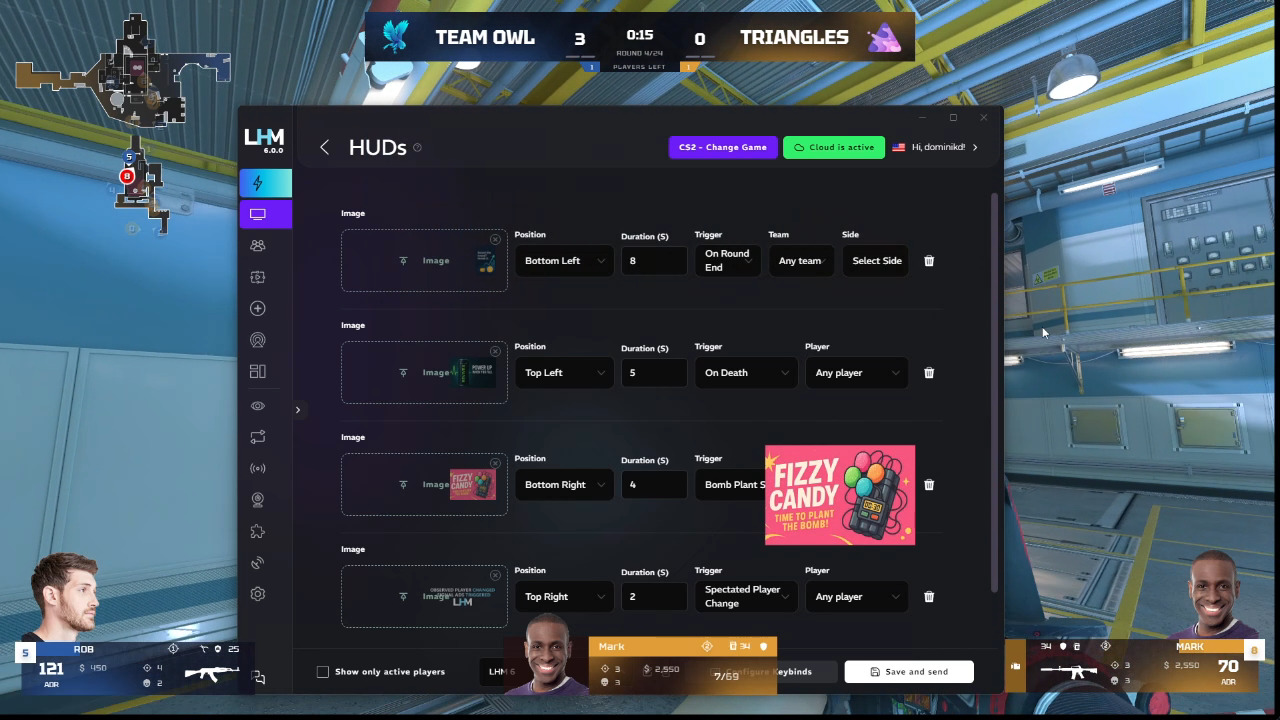
Event-triggered advertising differs from:
- Permanent placement: visible for most or all of the show.
- Scheduled rotation: changed according to a timer or playlist.
- Manual triggering: launched directly by an operator.
- Event triggering: launched automatically when a defined event or condition is detected.
Using LHM Signals Ads for Broadcast Sponsorships
LHM Signals Ads enables automated, event-triggered sponsor graphics within supported LHM Ultra HUD workflows.
Supported in-game events, such as Round End and Freezetime in CS2, can be used as automatic ad triggers. Sponsor content can also be activated during moments such as timeouts.
A creative can appear within the current HUD or as a separate overlay. Available placement options include the corners of the HUD, the center of the screen, and a full-screen overlay that temporarily replaces the HUD during the selected event. Producers can assign different ads to different events and control how long each creative remains visible.
Signals Ads are available for Ultra HUDs in CS2, Dota 2, and League of Legends. Producers can configure the creative, its position, display duration, and in-game trigger, with additional conditions available for selected triggers.
This gives organizers a way to connect sponsor content with repeatable match moments instead of relying only on permanent banners.
What to Include in Esports Sponsorship Packages
Esports sponsorship packages should describe specific production deliverables rather than promise general “stream exposure.” Inventory may include:
- named logo positions and screens;
- sponsored segments and replay packages;
- a planned number or range of activations;
- eligible game events or safe broadcast windows;
- MVP, statistics, full-screen, social, and studio placements;
- category exclusivity;
- creative formats, duration, and frequency;
- approval and technical-test deadlines;
- post-event proof such as recordings, timestamps, screenshots, or production logs.
Conclusion
Effective esports advertising depends on context, timing, and integration with the broadcast. Permanent logos still have a place, but stronger packages combine them with useful segments, protected ad windows, social content, and clear deliverables.
For organizers and production teams that want sponsor creatives connected with selected match moments, automated sponsor ads for esports broadcasts with LHM Signals Ads provide an event-based option within supported LHM Ultra HUD workflows.